

 Celebrity Travel
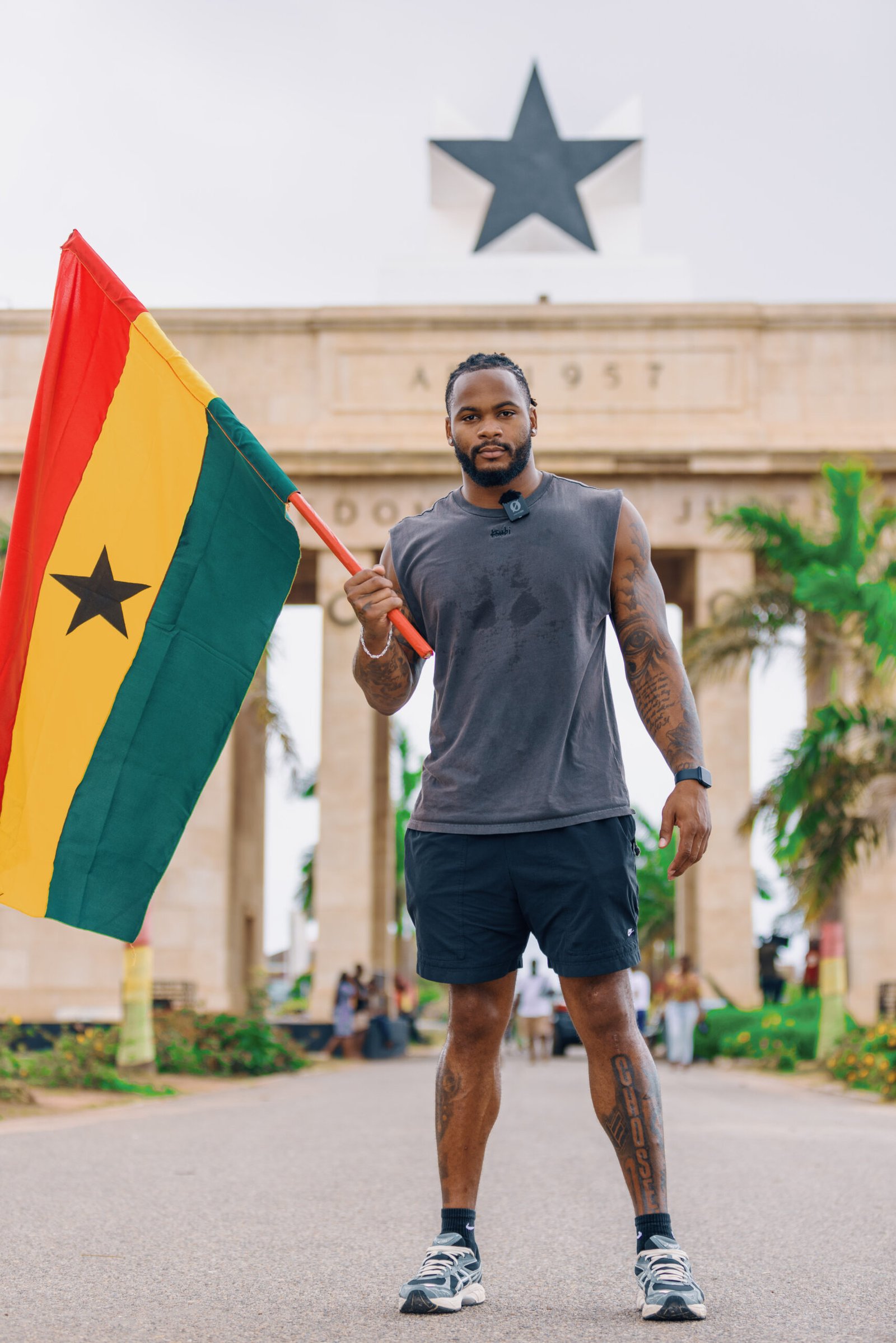
How one player’s NFL Offseason visit to Cape Coast Castle and Assin Manso Slave River revealed that true athletic recovery begins with confronting ancestral pain.
The Morning That Changed Everything
On Day 2 of his historic NFL offseason trip to Ghana with AfriConnect Travel Group, Dallas Cowboys defensive end Sam Williams (#54) woke in his Kempinski Hotel suite to a question that would define his entire journey: “Are you ready?”
After the joyful drums and dancing of Day 1‘s royal welcome in Accra, Day 2 would take Sam somewhere infinitely deeper, to the places where millions of his ancestors took their last steps on African soil before being forced into bondage. To Assin Manso Slave River, where enslaved Africans bathed for the final time in their homeland’s waters. To Cape Coast Castle, where they were held in dungeons before walking through the infamous Door of No Return.
And for an athlete recovering from ACL surgery, seeking not just physical healing but mental and spiritual fortitude for his NFL comeback, this day would prove that the deepest recovery happens when you confront the weight your ancestors carried.
The Journey to Assin Manso: Ghana’s Sacred Ground
The two-hour drive from Accra to the Assin Manso Slave River site in Ghana’s Central Region is deliberately contemplative. AfriConnect’s experienced guides understand that heritage tourism demands emotional preparation. As Sam’s vehicle traveled through Ghana’s lush countryside, his guide shared stories, not just historical facts, but the lived experiences of families torn apart, communities destroyed, and resilience that somehow survived.
Assin Manso Slave River, also known as Donkor Nsuo (“slave river”), sits quietly in the town of Assin Manso, about 70 kilometers north of Cape Coast. This unassuming river carries unspeakable significance: it was here, at this very water’s edge, that captured Africans, brought from as far as present-day Mali, Burkina Faso, and northern Ghana, were forced to bathe before beginning their final march to the coast.
This was their last bath in African waters. Their last touch of ancestral soil. Their last moment of being African before becoming “cargo.”
The Power of Standing on Sacred Ground
When Sam arrived at the Assin Manso memorial site, something shifted. The modern memorial park, established as part of Ghana’s heritage preservation efforts, features:
- The Last Bath Memorial: Marking the exact riverbank where enslaved Africans bathed
- Ancestral graves: Two symbolic repatriations, Crystal from Jamaica and Samuel Carson from the United States, whose remains were returned through the Door of No Return at Cape Coast Castle
- The Memorial Wall: Names of African ethnic groups affected by the slave trade
- Walking paths: Following the route captives took toward the coast
- Interpretive center: Documenting the Trans-Atlantic slave trade’s impact
But no architectural feature could prepare Sam for the emotional weight of standing barefoot on that riverbank, as his guide explained the Ghanaian belief that touching ancestral earth barefoot connects you to its strength and power.
“This is where they washed,” the guide explained quietly. “Stripped of their clothes, their dignity, their names. But the water still blessed them. The earth still held them. They remained African, even as they were stolen.”
Sam, an NFL athlete accustomed to controlling his body and emotions, found himself crying. Not from sadness alone, but from the profound recognition that he was here, standing free, powerful, celebrated, on the same ground his ancestors left in chains.
Cape Coast Castle: Confronting the Door of No Return
If Assin Manso prepared Sam emotionally, Cape Coast Castle demanded that he bear witness.
Located in Cape Coast, Ghana’s Central Region, Cape Coast Castle is the largest of approximately 40 slave castles and forts that line Ghana’s coast. Built originally by the Swedes in 1653 (as Fort Carolusburg) and later controlled by the British, this UNESCO World Heritage Site served as a major hub in the transatlantic slave trade from the 17th to 19th centuries.
The castle’s stark white walls, overlooking the breathtaking Atlantic Ocean, create a jarring visual contrast, beauty built atop horror, colonial architecture funded by human trafficking, ocean breezes that once carried the sounds of suffering.
A Guided Tour Through History’s Darkest Chapter
AfriConnect’s heritage tours at Cape Coast Castle don’t rush. They can’t. Sam’s guide, a Ghanaian historian trained in diaspora-sensitive storytelling, walked him through:
The Male Dungeons: Dark, airless chambers where up to 1,000 enslaved men were packed at once, standing in their own waste, with minimal food and water, for weeks or months while awaiting ship transport. The dungeons’ floor grooves, worn smooth by countless feet and the scraping of iron chains remain visible today.
The Female Dungeons: Separate chambers where enslaved women faced additional horrors. The guide explained, with respectful directness, the sexual violence that occurred, the pregnancies that resulted, and the children born in darkness.
The Condemned Cell: A small, pitch-black room with no ventilation where rebellious captives were left to die slowly. Many did.
The Governor’s Quarters: Opulent rooms directly above the dungeons, where British colonial administrators lived in luxury while enslaved Africans suffered below. A church sat atop the castle, Christianity and commerce, salvation and slavery, existing in perverse proximity.
The Courtyard: Where enslaved people were inspected, branded, and organized for transport. Sam stood in this space, imagining the terror, the confusion, the last glimpses of African sky.
And finally, the Door of No Return.
Walking Through the Door of No Return
The Door of No Return at Cape Coast Castle is a narrow passageway leading from the castle’s dungeons directly to the Atlantic Ocean, where slave ships waited. Once captives passed through this door, they left Africa forever, or so the slavers intended.
The door itself is modest, an archway barely wide enough for two people. But its psychological weight is immense. Through this opening, an estimated 70,000 enslaved Africans per year during peak trade periods were loaded onto ships bound for the Americas.
Most never touched African soil again.
Sam stood at the threshold, looking out at the Atlantic Ocean, the same view millions of his ancestors had before being forced onto ships. The same sun, the same salt air, the same water. But where they walked through in chains, terrified and alone, he walked through as a free man, an American, an NFL athlete who’d just been welcomed home with drums and celebration.
The guide explained that in recent decades, Ghana renamed this passage. Now there’s also a Door of Return, a symbolic recognition that diaspora descendants can come back. That the door that was meant to erase them couldn’t ultimately succeed. That Sam, and travelers like him, reclaim something powerful by walking back through.
Sam placed his hand on the doorframe. He thought about his ACL injury, his comeback, his career pressure. And standing there, at the Door of No Return, those concerns seemed simultaneously more meaningful (because ancestors fought for his freedom to play) and less important (because mere athletic performance pales beside what his people survived).
The Historical Context: Understanding the Trans-Atlantic Slave Trade from Ghana
To fully appreciate Sam’s experience, understanding Ghana’s role in the Trans-Atlantic slave trade is essential.
The Numbers
Between the 16th and 19th centuries:
- Over 12 million Africans were forcibly transported across the Atlantic
- Ghana’s coast (the “Gold Coast”) became one of the primary departure points
- Cape Coast Castle alone shipped millions of enslaved people
- An estimated 1.5-2 million died during the Middle Passage crossing
- Countless more died in the dungeons, during capture, or on forced marches to the coast
The Route
The journey Sam traced on Day 2 follows the actual slave route:
- Capture: Africans from interior regions (northern Ghana, Mali, Burkina Faso, Niger) were captured through warfare, kidnapping, or sold by complicit leaders
- March to Assin Manso: Forced marches, often covering hundreds of miles, to central collection points
- Last Bath at Assin Manso: Ritual washing in the river before coastal transport
- Hold at Cape Coast Castle: Imprisonment in dungeons for weeks to months
- Door of No Return: Loading onto ships through the castle passage
- Middle Passage: The horrific ocean crossing to the Americas
- Enslavement: Generational bondage in the Americas, Caribbean, and South America
Ghana’s Role as Heritage Destination
Ghana has become the premier destination for African diaspora heritage tourism, particularly since the 2019 Year of Return initiative. The government recognizes that:
- Heritage sites like Cape Coast Castle attract over 1 million visitors annually
- Assin Manso Slave River has become a pilgrimage site for diaspora reconnection
- The Door of Return symbolizes healing and reclamation
- Economic impact from heritage tourism supports preservation and education
- Emotional healing for diaspora travelers creates a powerful transformation
Sam’s journey is part of this larger movement, African Americans, Caribbean diaspora, and Black people worldwide seeking connection with pre-enslavement African identity.
The Door That Couldn’t Break Them Won’t Break You
Sam Williams stood at the Door of No Return and realized something profound: The door that was meant to erase his ancestors failed. They survived. They thrived. They produced him.
That door represents enslavement’s intent to destroy, but it also represents the indomitable strength that allowed African people to endure, resist, and eventually overcome.
When Sam walked back through as a free man, an NFL athlete, an American proudly reclaiming his African roots, he reclaimed power that slavery tried to steal.
And now, that same transformative experience awaits you.
Whether you’re an athlete seeking mental fortitude for your comeback, a fan wanting to understand the depth beneath the game, or simply a person of African descent ready to touch ancestral ground, Cape Coast Castle and Assin Manso offer healing that can’t be found anywhere else.
The Door of No Return became the Door of Return.
Your ancestors survived so you could thrive.
And Ghana is waiting to show you the strength you’ve always carried.
Visitor Information: Planning Your Own Cape Coast & Assin Manso Experience
Inspired by Sam’s journey? Here’s how to experience Cape Coast Castle and Assin Manso Slave River for yourself:
Cape Coast Castle
Location: Cape Coast, Central Region, Ghana
Distance from Accra: 150 km (93 miles), approximately 2.5-3 hours drive
Hours: 9:00 AM – 4:30 PM daily
Admission: International visitors: ~$15 (prices subject to change)
Tour Duration: 60-90 minutes
UNESCO Status: World Heritage Site since 1979
Contact: Ghana Museums & Monuments Board
What to Expect:
- Guided tour through dungeons, courtyards, and the Door of No Return
- On-site museum with artifacts and historical exhibits
- Gift shop with books and cultural items
- Photography allowed in most areas (respectful photos only)
- Emotionally intense experience, prepare accordingly
Best Time to Visit: Early morning (fewer crowds, cooler temperatures)
Assin Manso Slave River Site
Location: Assin Manso, Central Region, Ghana
Distance from Cape Coast: 70 km (43 miles), approximately 1 hour drive
Hours: Dawn to dusk (outdoor memorial site)
Admission: Small fee collected on-site
Tour Duration: 30-45 minutes
Features: Memorial park, Last Bath site, ancestral graves, walking paths
What to Expect:
- Emotional riverside memorial
- Opportunity to walk barefoot in ancestral waters
- Smaller, more intimate experience than Cape Coast Castle
- Local guides available for hire
- Bring tissues (most visitors cry).
Cultural Protocol:
- Remove shoes when approaching the river (optional but meaningful)
- Speak quietly and respectfully
- Some visitors pour libations or leave offerings
- Photography is allowed, but be respectful
Combining Both Sites: The Full Heritage Experience
Most tours visit both locations in one day:
Typical Itinerary:
- 6:00 AM: Depart Accra
- 8:30 AM: Arrive, Assin Manso
- 9:00-10:00 AM: Assin Manso tour and reflection
- 11:00 AM: Arrive Cape Coast
- 11:30 AM-1:00 PM: Lunch near Cape Coast Castle
- 1:30-3:30 PM: Cape Coast Castle tour
- 4:00 PM: Depart for Accra
- 6:30 PM: Arrive Accra
What to Bring:
- Water and snacks
- Comfortable walking shoes (you’ll remove them at Assin Manso)
- Sunscreen and hat
- Tissues or a handkerchief
- Journal for processing
- Camera (with respectful use)
- Light clothing (Ghana is hot, but dress modestly)
- Open heart and emotional readiness
Beyond Tourism: The 2nd NFL Offseason Trip to Africa
Sam Williams’ Day 2 experience at Cape Coast Castle and Assin Manso was not just a personal transformation; it’s now part of AfriConnect Travel Group’s proven model for athlete wellness tourism.
The 2026 NFL Offseason Trip to Ghana builds on Sam’s journey, offering both professional athletes and dedicated fans the same life-changing experience.
The 2026 program includes:
✅ Heritage Site Tours – Cape Coast Castle, Assin Manso, Elmina Castle with athlete-focused framing.
✅ Beach Therapy Days – Coastal resorts for rest, recovery, and ocean healing.
✅ Community Engagement – Youth football clinics, cultural exchanges, giving back.
✅ VIP Treatment – 5-star accommodations, private transportation, 24/7 concierge support.
From the dungeons of Cape Coast Castle to the freedom of NFL stardom, this is the journey that changes everything. This is the AfriConnect Travel Group experience, and this is your invitation to come home.

